
By KARIN LEE
Special to Northern Valley Press
Closter, building on lessons learned from Hurricane Ida in 2021, is kicking off 2026 determined to plan more deliberately for flooding. Initiatives include tightening stormwater standards, pursuing new grant funding, and prioritizing projects that reduce risk on streets and near waterways.
Speaking at the borough’s reorganization meeting on Jan. 5, and in subsequent email interviews, borough officials said flood resilience will be a central focus of the borough’s 2026 planning and capital priorities.
Borough Administrator James Winters said at the meeting that the borough reviews each flooding event to understand what happened and what can be improved. “The Borough is always taking a look at these types of issues … We look at how it happened, why, [and] what can we do,” he said.
In follow-ups, Mayor John Glidden and Council Member Chris Cho pointed to a 2024 amendment to the borough’s building ordinance as one example of changes made in response to updated stormwater guidance. Officials said the borough increased required drain sizes for certain construction from 2 inches to 3 inches to better accommodate heavier rainfall and reduce localized flooding.
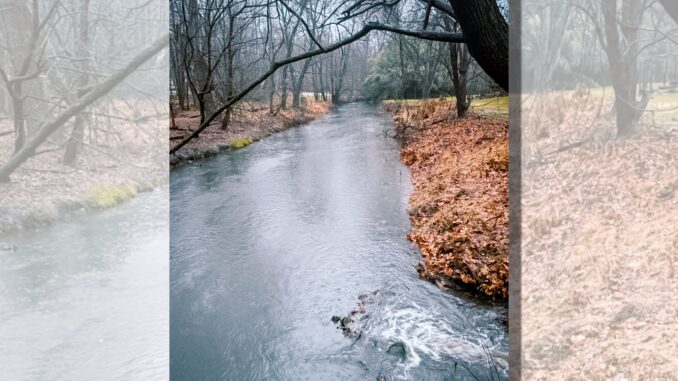
Closter has also overseen five large stormwater management projects, officials said: work along the Dwars Kill Brook at Colgate and Ruckman Road, Anderson Brook at Meadow Lane and Homans Avenue, and drainage improvements at
Hickory Lane. The work has included cleaning brooks and stabilizing banks. Some projects were partially funded by federal grants, while others were funded locally.
“Any time we can, the borough actively seeks federal and state funding to help ease financial burdens on residents,” Glidden said.
Environmental Commission Chair Paul Yarin said the commission is also pushing for an updated Environmental Resource Inventory (ERI) to help guide land-use and planning decisions. “In the case of Closter, our last ERI was created in 1994,” Yarin said. “The Environmental Commission wants to create a new ERI both as a long-term reference and as a way to communicate the current risks faced by our local environment.”
Outside modeling suggests risk may grow. According to data from the First Street foundation, a nonprofit research group, about 337 properties in Closter face some level of flood risk, with hundreds more projected to face risk in coming decades. First Street notes its models approximate risk and do not include all possible scenarios. (First Street Foundation has an online tool that lets users enter an address and view estimates of flood and extreme-heat risk for that specific property, looking as far as 30 years out, helping residents better understand and prepare for hazards.)
Local leaders said residents can expect continued work in 2026 to align with NJ Department of Environmental Protection regulations, pursue grants for drainage and infrastructure projects, and update environmental data to guide future decisions.
Hurricane Ida remains the reference point for many of these efforts. The early September 2021 storm brought record rainfall to North Jersey, overwhelming streams and drainage systems, flooding homes, roads and businesses, and causing widespread damage across the region. That Sept. 5, President Joe Biden issued a major disaster declaration for the state, opening the door to federal assistance for eligible residents
Statewide recovery costs ran into the billions, and the storm underscored for local officials how quickly intense rainfall can turn into a public safety and infrastructure crisis — lessons Closter leaders say continue to shape how the borough plans for the future.
The Closter Environmental Commission, formed in 1976, advises the borough on environmental issues including water resources and open space, and reviews planning and zoning applications when appropriate. Meetings are held the second Thursday of each month at 7:30 p.m.
Karin Lee is a student at Northern Valley Regional High School at Demarest who is interviewing residents and local officials across the Northern Valley to explore how towns view their vulnerability to climate change, particularly around flooding and extreme heat.