
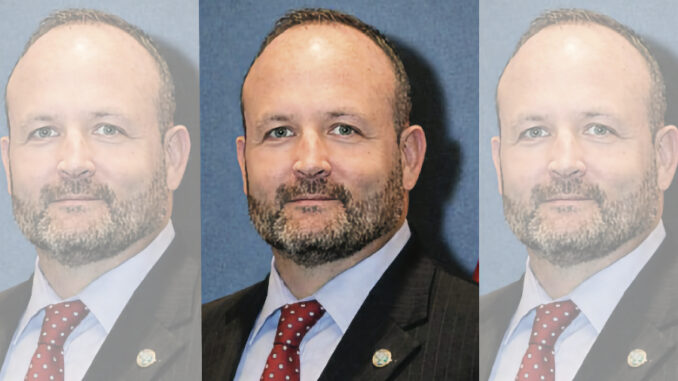
ENGLEWOOD—Deputy Police Chief Matthew De La Rosa has served with the Englewood Police Department since 2002, working assignments that range from patrol and investigations to training and administration. This month, De La Rosa discusses his work on a Homeland Security Investigations task force focused on financial crimes, and how policing has shifted since he entered the profession. He also reflects on the emotional toll officers can face, the department’s emphasis on resiliency supports, and the outreach efforts he says are helping strengthen connections with Englewood residents.
The NVP Interview
By Hillary Viders
Viders: You have so many credentials, it’s hard to single out just a few. But I think that most everyone is very interested in homeland security. What work do you do as a NJ State Police Task Force Officer for Homeland Security Investigations?
De La Rosa: While assigned to HSI I was fortunate to be part of a group that mainly dealt with illegal activity and money laundering. I ended up as the case agent where multiple parties laundered over $100 million using variations of trade-based money laundering as well as black market peso exchange techniques. The case went to trial where we secured a guilty verdict. I was able to use my accounting and finance background to trace all these funds and bring these individuals to justice.
Viders: How is Englewood prepared for national security?
De La Rosa: We are consistently communicating with our state and federal partners to address and prepare for any threats against the homeland. We take these threats very seriously and prepare our personnel to handle any situation they may encounter.
Viders: Which of the units with which you served was the most challenging?
De La Rosa: Internal Affairs has to be the most thankless job for any officer. You need to uphold the rules of the department and at times hand down decisions that will result in discipline for your personnel. However, when you are always fair and impartial, everyone usually sees that the officer determines the discipline, not the personnel assigned to investigate it. The Englewood Police Department must be steadfast in holding our personnel accountable when appropriate.
Viders: How has law enforcement in Bergen County changed over the last few decades?
De La Rosa: Law enforcement in Bergen County and the State of New Jersey has transformed immensely since I began my career in 2002. The policies and procedures have become much more detailed and cover almost every single area of policing. Items that took a few minutes now take an hour. Items that took an hour now take multiple hours. We have done our best to leverage technology to claw back that time, but there are certain items you can’t do any faster.
There was very little technology years ago and the things we did have were not specifically made for policing. Now there is technology for everything, and you have to really evaluate each part of your systems so we can hit the sweet spot of what works best for us.
The department I walked into is not even close to the department we run now. This is not to speak poorly of the brave men and women that came before, but the department is a truly professional agency that puts its residents first.
Viders: Have you had to deal with or witness any volatile and distressing situations? Does this take an emotional toll?
De La Rosa: The average person is likely to experience only two to four traumatic events in their entire lifetime. Studies indicate that police officers may encounter 400 to 600 traumatic events during an average career. Other estimates suggest officers may experience 800 to 1,000 traumatic events in their career, or approximately three to five significant traumatic events per month.
I have seen my share of terrible situations. As police officers, death, domestic violence, crimes against children and the elderly, burglaries, and traffic accidents are somewhat commonplace. You learn to deal with it the best you can and not get emotionally involved. It may seem cold, but if you take every incident personally and carry that baggage, it will emotionally destroy you.
Unfortunately, there are too many instances where children are hurt or victims. Those are tough to get over, if you ever do. Those are by far my nightmare circumstances.
Fortunately, the state has instituted Resiliency Program Officers to be involved in assisting officers in their time of need.
Here at EPD, we have officers attend mental health check-ups every two years and do resiliency training every two years to make sure we are setting up our officers for success in coping with the rigors of the job.
Viders: On a positive note, what are some of the outreach programs that you participate in?
De La Rosa: The EPD does an amazing job at community outreach, which is a far cry from five years ago. The Junior Police Academy allows us to bond with our youth and show them what it may be like to become a police officer. Faith and Blue puts our personnel in houses of worship to get to know our community. We also hold Englewood Night Out and Movie Night.
These have all paid dividends and allow our officers to meet residents in a regular situation as opposed to meeting them when they are having one of their worst days. It allows both sides to see each other as regular people.
My favorite part is, for the first time in my career, I feel like the police department is a truly active part of the entire city community.
Viders: What do you find most rewarding about your job?
De La Rosa: When you first start your career, you want to chase bad guys, make drug and gun arrests. As you move along in your career, the most important thing is solving problems and positively impacting everyone’s life as much as possible.
A CPR save is one of the most humbling things we can do. A person who may not have been there for the holidays is now able to be with their family because our personnel were trained and properly equipped to handle the situation.
At this point in my career, I try to do all the things I wanted to be done when I was a patrol officer to make their job better and for them to be more effective. It’s my job to assist the Chief in giving all the great men and women in our department the tools and guidance to make the City of Englewood as safe as possible.
It’s unfortunate that you have to leave the police car and the street, so you don’t get to be as hands-on, but if all your officers are in a better position to do the most good, it’s truly rewarding.