
NEW YORK CITY — A federal judge on Tuesday ruled that the Trump administration acted unlawfully in attempting to terminate New York City’s congestion pricing program, delivering a major victory to the city and the Metropolitan Transportation Authority.
In a 149-page decision, U.S. District Judge Lewis Liman found that the federal government improperly revoked its prior authorization of the tolling plan. He wrote that the termination was unlawful and that any attempt to enforce the February rescission would also be illegal.
The ruling follows months of litigation after the U.S. Department of Transportation withdrew federal approval for the program. A decision had been expected late last year, but arguments resumed in January.
MTA Chair and CEO Janno Lieber said the court affirmed the program’s legality and signaled it will continue.
“Traffic is down, business is up, and we’re making critical investments in a transit system that moves millions every day,” Lieber said in a statement.
Gov. Kathy Hochul also praised the ruling, writing on social media that the effort to dismantle congestion pricing “failed in court,” and adding that the tolling cameras would remain on.
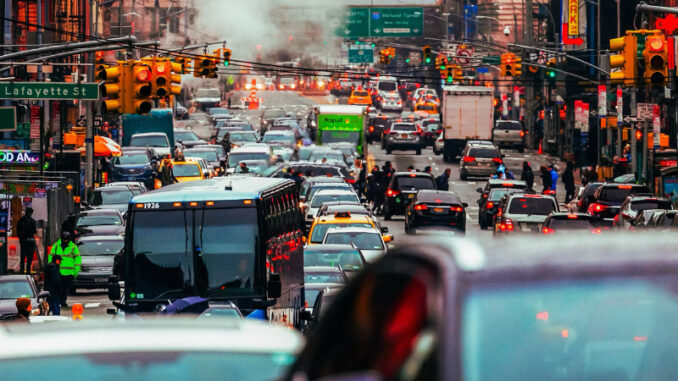
Congestion pricing took effect Jan. 5, 2025, requiring most drivers to pay $9 during peak hours to enter Manhattan south of 60th Street.
Earlier this year, President Donald Trump directed the MTA to end the program by March 18 to allow for what federal officials called an “orderly cessation.” State and transit officials declined to comply, keeping the tolls in place.
Transportation Secretary Sean Duffy later warned that certain federally funded road projects in the city could be delayed if the program continued.
Transit officials say the policy has reduced traffic and improved air quality. Since implementation, vehicle speeds on Manhattan crossings have increased 23%, while pollution levels within the congestion zone have declined 22%.
Revenue from the toll is slated to fund transit improvements, including new subway and commuter rail cars, accessibility upgrades at 23 stations, signal modernization on the A and C lines, and continued work on the Second Avenue Subway. Additional legal challenges to the program remain pending.