
SPECIAL TO PASCACK PRESS
BY ROSA L. ANTONINI
I was standing behind the counter of a check-cashing store in Union City when a decision I didn’t know I was making began to take shape.
I had earned a degree in pharmacy in the Dominican Republic, but in the United States I could not practice until my credentials were validated and I obtained the necessary license. While I worked through that process, I took a minimum-wage job cashing checks.
Most days were predictable. People came in, completed their transactions and left.
That evening, the workday was beginning to wind down. I remember looking through the window as it started getting dark outside and thinking we were getting close to closing time.
Then a man walked in and handed me a check to cash.
As I always did, I looked over the check carefully. Depending on the company that issued it or the amount, I sometimes needed
additional approval before I could cash it.
That was when I noticed the amount.
The check was for more than a thousand dollars.
At that point in my life, that seemed like a huge amount of money, more than I made in weeks. But what caught my attention was not money simply for the sake of having more of it.
I was starting over in a new country. I had an education and a profession, but neither could support me yet while I worked through the licensing process. At that moment, financial stability was not an abstract ambition; it was the most immediate priority in front of me.
So when I saw that check, I became curious.
I asked him what he did for a living.
He could easily have answered and walked away. Instead, he told me he worked in technology. I knew almost nothing about the field, so I kept asking questions. How did someone get into that kind of work? What kind of training did it require?
He gave me the names of a couple of schools and programs.
The entire conversation probably lasted ten minutes.
The next day, I called every program he had mentioned.
When I eventually sat across from someone at one of the schools, I didn’t ask which course sounded most interesting or which program was easiest. I asked a much more practical question:
“What do you teach here that makes the most money?”
The answer was programming.
“Okay,” I said. “I’ll do that.”
When I look back now, I am struck less by the question than by what I did after hearing the answer.
I already had a profession.
I had spent years studying pharmacy. I was actively working through the process that would allow me to practice in the United States. I had invested time, effort and a significant part of my identity in becoming a pharmacist.
Yet I allowed myself to consider something completely different.
It wasn’t because pharmacy had been the wrong choice. It wasn’t because I was unable to complete the licensing process. In fact, while studying programming, I continued validating my pharmacy credentials. Two years later, I had completed both.
For a moment, I genuinely had two roads available to me.
I chose technology.
That decision eventually led to my first job in the field, at what was then Bank of New York Mellon. Later, I returned to school for a master’s degree in information systems at Stevens Institute of Technology, Hoboken. What began with a question to a stranger became a career I came to genuinely love.
But the lesson that stayed with me was not simply that changing careers can work out.
It was what I had been willing to release in order to make the decision.
I had not erased my years of studying pharmacy. They remained part of my education, my experience and who I had become. But I did something that is often much harder than it sounds: I stopped requiring my next decision to justify everything I had already invested in the previous one.
We do this more often than we realize.
We stay with careers because we spent years preparing for them. We remain committed to plans because we have already invested so much time. Sometimes we hold onto versions of ourselves because changing direction feels as though we are admitting that everything that came before was wasted.
But a previous decision does not have to have been wrong for a new decision to be right.
That is something I understand much more clearly today than I did standing behind that counter.
At the time, I wasn’t thinking about identity, reinvention or the psychology of change. I wasn’t analyzing what I might be giving up. I simply looked at what was in front of me and asked what I could do next.
There is something freeing about that question.
Not, “How do I make sure all the years behind me were worth it?”
Not, “What am I supposed to do because of the path I already chose?”
Not, “How will people judge me for starting over?”
But, “Given what I know now, what makes sense from here?”
Those are very different questions.
The past matters. Our experiences matter. The things we have worked for matter. But none of them can make today’s decisions for us.
I sometimes wonder what would have happened if I had never asked that stranger what he did for a living. Perhaps I would have returned fully to pharmacy. Perhaps another opportunity would eventually have appeared. There is no way to know.
What I do know is that one ordinary conversation showed me something I have carried through many decisions since: we do not always need a complete plan before allowing ourselves to consider another direction.
Sometimes new information enters our lives unexpectedly. A conversation. An opportunity. A realization. Something that causes us to look at what we thought was settled and see another possibility.
The difficult part is not always recognizing that possibility.
Sometimes the difficult part is giving ourselves permission to follow it.
I thought I was asking a stranger what he did for a living.
I had no idea I was asking a question that would eventually change what I did for mine.
About this series: This week, Pascack Press continues “In My Experience,” an occasional series offering first-person reflections from people with stories and lessons to share.
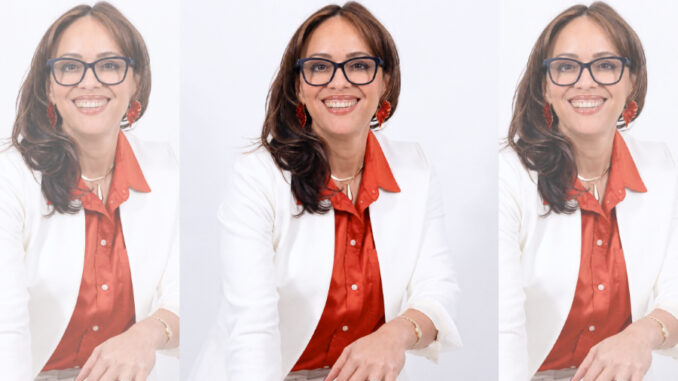
About the author: Rosa L. Antonini is a Hillsdale software engineer, systems thinker, author, and founder of Rosa Antonini Academy. Her work connects technology, human behavior and personal growth, exploring how people adapt and make decisions amid uncertainty. She is the author of “The Zero-Sum Game of You” and “Resourcefulness,” and founder of Wonders of My World, a philanthropic initiative supporting vocational training and practical education for underserved communities. Learn more at rosaantonini.com.