
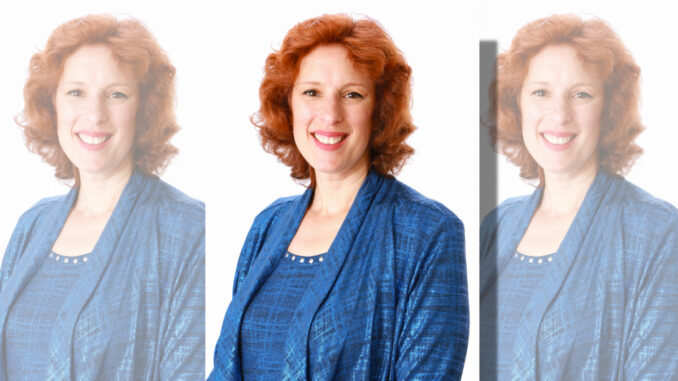
TENAFLY, N.J.—Julie O’Connor, PhD, is a longtime educator, humane education advocate, and third-term member of the Tenafly Council. A teacher and instructional supervisor for nearly 30 years in New York City and New Jersey public schools, she earned her doctorate in education with a focus on curriculum and instruction, studying how humane education — prosocial learning centered on compassion toward animals, people, and the environment — can improve student motivation and achievement.
O’Connor has presented at conferences including The Oxford Animal Ethics Summer School, the NJEA Teachers Convention, and the American Teacher Educators Conference. Her publications include the peer-reviewed study Humane Education’s Effect on Middle School Student Motivation and Standards-Based Reading Assessment and the nonfiction book “United States of Friendship: Pen Pals of 9/11.” Her latest work will appear this spring in an Oxford Centre for Animal Ethics volume on humane education. She also serves as educational director for the Animal Protection League of New Jersey.
On the council, O’Connor has focused on environmental, cultural, and community initiatives, including EV charging stations, Tenafly’s free tree program, composting efforts, Juneteenth and Diwali celebrations, and improvements at Grove Street Park. She serves as liaison to the Board of Health, Environmental Commission, and Stigma Free Committee, and was recently named policy advisor for District 37 Assemblywoman Shama Haider.
Hillary Viders: Humane education has been a major focus of your life. What is involved in this field?
Julie O’Connor: I have been a teacher for decades, and I try to use humane education strategies as much as possible. Humane education involves organizing lessons around the principles of compassion and empathy toward animals, environmental stewardship, and their connection to human health. I teach standards-based lessons while infusing messages of kindness. My research in the field has shown that students are more motivated to learn when a teacher plans lessons in this way.
HV: How do you instill humane values in your children?
JO: I lead by example. My son and daughter have grown up seeing my volunteerism and how I try to live my values. For example, I help organize the annual town-wide trash cleanup. Every year, we turn removing litter in the community into a family affair. Both of my children are good people who give back to the community. For example, my daughter volunteered at Feral Cats of Bergen County throughout high school, and my son was president of the high school Paw Club, which fundraised for local animal rescues.
HV: You have been involved in so many projects in Tenafly. Do you have one or two favorites?
JO: I love how Grove Street Park became an area of both passive and active enjoyment for people of different interests. I am proud of the EV charging I brought to downtown, which simultaneously encourages shoppers to support our local businesses and promotes electric vehicle usage. I am also incredibly proud of Tenafly’s free tree program, which uses money from our shade tree trust to plant trees in front of homes whose owners request them. I try very hard to promote that program because so many residents have expressed concerns that we are losing too many trees. This program empowers residents to take positive action.
I am so glad to have helped initiate a composting program in Tenafly. As of the end of 2025, we had diverted more than 40,000 pounds of food waste from ending up in landfills.
HV: What are the main assets that draw people to Tenafly?
JO: Our schools are high quality. In addition, our borough’s proximity to the city is very convenient, yet we maintain a more tranquil quality of life by preserving our green spaces. The Tenafly Nature Center appeals to many people who want to live close to New York City and be able to enjoy native New Jersey animals and greenery while on a hike.
HV: After you finish your terms as a Tenafly councilwoman, what are your plans?
JO: I would like to delve more into being Assemblywoman Haider’s policy advisor. There are many solutions we can implement across the state, and I want to use my skills to help develop policy — even after I am no longer on the council. Additionally, I would like to continue to conduct research in humane education so that I may demonstrate its value to other educators. I believe that educating young people by empowering them to make compassionate choices is our best hope for a more just future. I am not sure when my time on the council will end, but my work for this community will not stop there. I am ready to keep showing up for our society.