
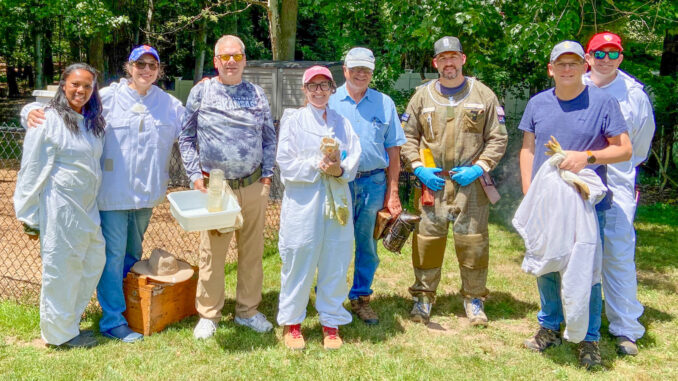
EMERSON, N.J.—Beekeepers from across northern New Jersey gathered at Centennial Park on June 21 as Emerson’s public apiary was featured on the Northeast New Jersey Beekeepers Association’s annual Hive Tour.
The event brought together new and experienced beekeepers for a day of hive inspections, demonstrations, and discussion focused on honey bee management and colony health.
Organized by local beekeeper Jill Albano of Hive Sweet Hive Apiary, the annual tour allows participants to visit a variety of apiaries, compare management practices, and learn from experienced mentors. This year’s inspections were led by Eastern Apicultural Society Master Beekeeper John Gaut, with additional insights from Cornell Master Beekeeper John Vervoort, president of the Northeast branch of the association.
The Centennial Park Apiary, operated under the Emerson Environmental Commission, offered tour participants a setting not often seen on the circuit: a working bee yard located on public property.
Unlike most apiaries, which are maintained in private backyards or on farms, the Emerson site sits alongside community gardens in a public park and serves as both a functioning apiary and an educational resource for residents.
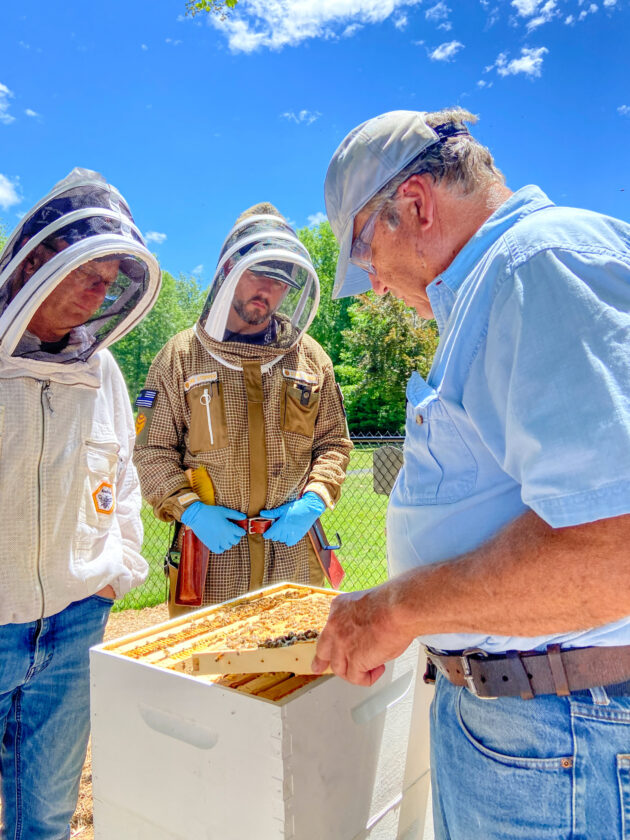
During the tour, participants observed hive inspections and discussed seasonal beekeeping practices, including colony growth management, brood pattern evaluation, queen identification and marking, food reserves, and methods used to monitor hive health.
Gaut demonstrated how beekeepers safely locate and mark queen bees, a technique that helps improve record-keeping and simplifies future hive inspections. Participants also reviewed alcohol wash testing, a standard procedure used to measure populations of varroa mites, the parasite considered one of the greatest threats to honey bee colonies in North America.
Beyond the technical demonstrations, the tour highlighted the collaborative nature of beekeeping. Conversations ranged from hive placement and apiary design to preferred protective equipment, inspection techniques, and strategies for managing colonies under different conditions.
Organizers said one of the goals of the Hive Tour is to expose beekeepers to different management styles and encourage the exchange of practical knowledge among members.
For Emerson officials, the selection of the Centennial Park Apiary as a tour stop reflects the Environmental Commission’s ongoing efforts to support pollinators and educate residents about the important role honey bees play in local ecosystems.
The Northeast New Jersey Beekeepers Association, a local branch of the state New Jersey Beekeepers Association, NJBA, hosts the Hive Tour annually as part of its mission to promote education, mentorship, and responsible beekeeping throughout the region.