
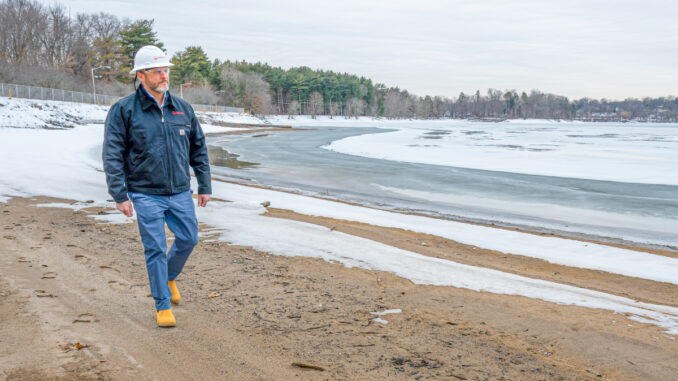
HAWORTH — Don’t let the recent snow and rain fool you: New Jersey’s key reservoirs remain well below normal levels, prompting Veolia to ask the roughly 1.1 million residents it serves statewide to continue water conservation.
Reservoirs in northern New Jersey, which are typically full at this time of year, are at just 43% capacity, Veolia said. The Oradell Reservoir is lower, at 37%. Recent snow and rainfall have provided minimal relief.
“The reservoirs are under stress,” said Alan Weland, regional president of Veolia’s operations in New Jersey, in a statement shared with us on Feb. 20. “It’s important that customers understand that recent snow and rain have not resolved our water supply challenges. We are asking everyone to make conservation a daily habit.”
Veolia said the region has been drier than usual over the past 18 months, with precipitation about 15 inches below normal—a shortfall that prompted the New Jersey Department of Environmental Protection to issue a statewide drought warning in December. While Veolia said it continues to meet customer demand, the extended dry period underscores the need for ongoing conservation.
Every Gallon Counts
Veolia encouraged residents to take simple steps such as repairing household leaks, eliminating unnecessary water use, and practicing daily conservation habits. The company also asked customers to call if they notice signs of a leak, such as water bubbling in the street.
Veolia said it has been working to safeguard water supplies through infrastructure improvements, including identifying and repairing more than 1,000 hidden underground leaks in recent years using technologies such as acoustic sensors, satellite imagery, drones, and data analytics. The company also described a process that captures water used to flush fire hydrants and moves it through advanced filters until it is clean enough to return to the system rather than running into the street. Together, Veolia said, these efforts have saved billions of gallons of treated water that would otherwise be lost.
“Our reservoirs are the heart of daily life in northern New Jersey and safeguarding them is both a responsibility and a privilege,” said Kendra Morris, CEO of Veolia’s regulated water business in North America. She said teams are monitoring reservoir levels, demand, and weather conditions “around the clock.”
Morris thanked customers for being mindful of water use and urged continued conservation as spring approaches and water demand typically increases—steps that, Veolia said, may help avoid potential restrictions later.
— Via Debra Vial, director of communications and community relations at Veolia North America.