TENAFLY, N.J.—Last year, Sophie Rose Cheson told Northern Valley Press that she was learning who she was through the stories she created.
“My grandmother was a writer,” she said. “I didn’t know I’d take her path.”
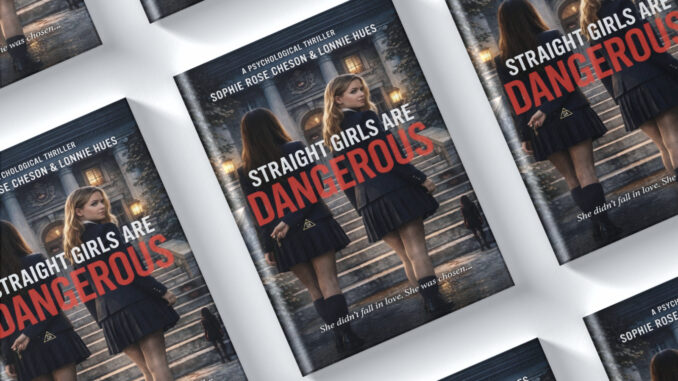
Now the Tenafly native has another work to add to that unfolding story. Cheson and creative partner Lonnie Hues have released “Straight Girls Are Dangerous,” a psychological thriller novella that puts a troubling question at the center of a young woman’s education: How much of the person you become is someone else’s design?
Released Aug. 4, the book follows Elizabeth, a young soccer player who sees a scholarship to Charlotte Academy as her escape from a controlling father. But the habits she learned at home — studying moods, anticipating demands, making herself smaller — follow her through the school’s doors.
“I thought this letter was my escape,” Elizabeth tells the reader. “I didn’t realize it was my leash.”
For Cheson, an actress, writer and photographer, the novella continues an interest in the forces that shape people within their closest relationships. Her earlier project, “Perfect Sylvia,” explored mothers, daughters and cycles of trauma through a screenplay, short story and social media storytelling.
“I’ve always been drawn to stories that feel human and raw,” she told us in 2025. “Perfect Sylvia isn’t just a character — she’s a mirror. She represents the parts of ourselves we try to fix or hide, the cycles we’re all trying to break.”
That project also helped establish a working relationship that has continued across distance and generations.
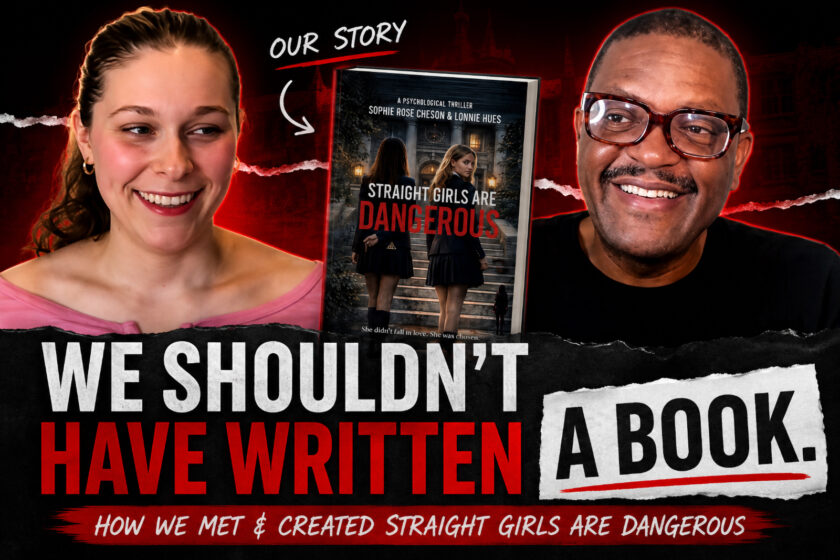
Cheson met her collaborator through her father, his college friend from decades earlier. What began as mentorship grew into a creative partnership. In the new book’s authors’ note, Cheson and Hues describe nearly two years of working together despite having met in person only once. More than three decades apart in age, they describe a process built around careful listening and following questions.
“What started as writing lessons turned into a partnership,” Cheson said in last year’s interview.
She also described the practical education of making work and trying to find an audience for it: pitching agents, approaching people she admired and developing material she could act in.
“I feel like I’ve gone through my own version of film school — just by doing,” she said then.
Their new book gives readers a very different sort of school.
At Charlotte Academy, Elizabeth must learn to read far more than her assignments. Clothes, hairstyles, money and friendships signal who belongs and who holds power. Classmates’ references to expensive cars and vacations underscore the distance between their lives and hers. Their mockery of her Mexican background makes the exclusion personal.
Even her name becomes a small struggle over autonomy: She asks others to stop calling her Liz, but the nickname persists.
“Survival has always been about subtraction,” she observes.
Rachel, her confident, commanding roommate, offers attention and belonging on troubling terms. Jonathan Willow, the academy’s first male teacher, introduces another relationship complicated by questions of trust and boundaries.
Told largely through Elizabeth’s first-person narration, the story moves through short chapters, memories and dreams, leaving readers to weigh what she sees against what she understands. It ventures into abuse, coercion and violence, while returning to the loneliness that makes the promise of connection so powerful.
Watching other students with their families, Elizabeth says, “I watch it all like it’s a movie I wasn’t cast in.”
The authors give the title a meaning beyond sexual orientation: a life that appears to follow a straight path may have been shaped at every turn by someone else’s expectations. Questions of attraction and identity remain part of Elizabeth’s experience, intertwined with the larger question of who gets to define her.
“We weren’t interested in writing a story that simply entertains people,” Hues said in the release announcement. “We wanted to create one that quietly changes the questions they ask themselves after they’ve closed the book.”
“Straight Girls Are Dangerous” is the first release from HuesManity, the pair’s creative studio. In a Sept. 14 email signed by both authors, they described plans for a podcast, independent bookstore placements and a reading or event in the New York–New Jersey area. They also were exploring a screen adaptation.
“Beyond the book itself, we’re continuing to build our creative company and develop additional screenplays and projects together, so this is really the beginning of something much bigger for us,” they wrote.
The ambitions have grown since our first conversation, but Cheson’s explanation of what draws her to the work still offers a useful starting point.
“Now I’m learning who I am through what I create,” she told us last year.
With another story in readers’ hands, that education continues.
“Straight Girls Are Dangerous” is available through Amazon, including a Kindle edition, according to the authors. Updates are posted on Instagram at @straightgirlsaredangerous.