
PASCACK VALLEY—Let’s continue our stagecoach journey through the 1860s Pascack Valley. We’ll follow the route the stagecoach took through this area 165 years ago.
The route began at the old Trading Post at Pascack and Mill roads in Park Ridge, with the horse-drawn carriage collecting passengers as it meandered through villages that we now call Woodcliff Lake, Hillsdale, Westwood and Emerson. Its destination was the Northern Railroad depot in Closter. This was how people traveled to New York City during that decade before the Pascack Valley got its own railroad line.
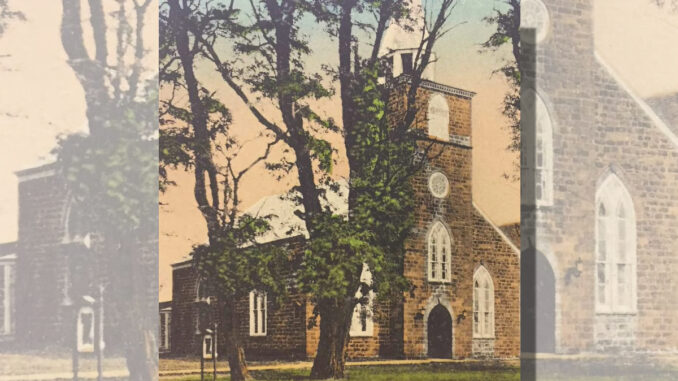
Last week we started off from the Trading Post and traveled south on Pascack Road. As we pick up the journey south on Pascack Road, we see the beautiful Pascack Reformed Church coming up on the left side. It is this section’s only house of worship, built some 50 years ago. Around it cluster the graves of the departed. Another cemetery only a little farther on has much older headstones, some written in the Dutch dialect that was once ubiquitous here. That cemetery was in use years before the church was built.
Even in this time, many of the older people still speak Jersey Dutch in their homes. It is a language unique to this section of America, a dialect of Dutch with some English and Lenape influence, and you wonder how much longer it will survive. One hundred years from now, in the 1960s, will anyone speak Jersey Dutch?
Soon we pass between an old sprawling barn and the residence of its owner, Benjamin Hill. His 18th-century home is one of the oldest in the Valley, constructed of native red sandstone. It still has the Dutch upper and lower doors and a “noon mark” on the floor by which the time can be told using a ray of sunlight. Such things were common at a time when clocks were a luxury.
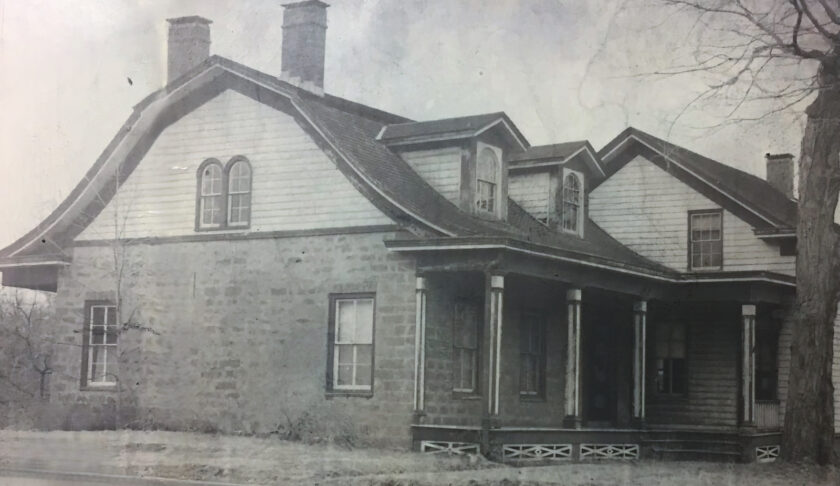
Hill is a relative newcomer to this land that had been passed down in the Wortendyke family since 1735. About a decade ago, in 1851, he paid Peter Wortendyke $2,800 for the homestead and 40 acres. Hill’s son-in-law, Albert Terhune, is a cobbler. He uses a portion of the house for his shop.
Beyond Hill’s homestead we come to a little rickety wooden bridge over the Bear Brook. On our right, the brook opens up into a pond where Isaac Demarest has his mill. Here lumber is sawed into boards, and the people of Pascack bring their grain to be ground into flour.
Coming up on the same side is Peter Jersey’s tavern, where elections are held every November. It is quiet now, but way back in 1840 it was the scene of a near-riot when the Township of Washington threatened to break off from old Harrington Township. The story of how a mob from Closter descended upon the polling place, had a row with the election officials and stole the ballot box is still talked about among the old-timers of Pascack.
As our stagecoach rolls forward with Closter as its destination, you wonder whether the farmers in that section still talk about it, too.
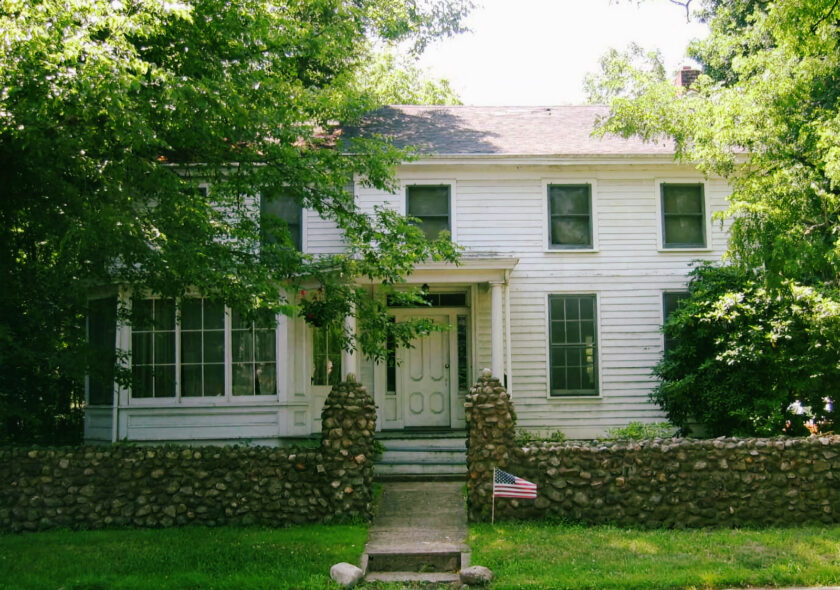
Off to our left is a massive stretch of countryside with a few farmhouses. Here we pass the charming sandstone homestead belonging to Frederick Wortendyke V. He inherited the farm just a few years ago from the estate of his father, Frederick Wortendyke IV, who built it some 50 years earlier. The family runs a store across the street, selling dry goods, groceries and household items. There is also a post office inside, and Mr. Wortendyke is the postmaster. He looks up from his work and waves to our driver as the stage rolls by.
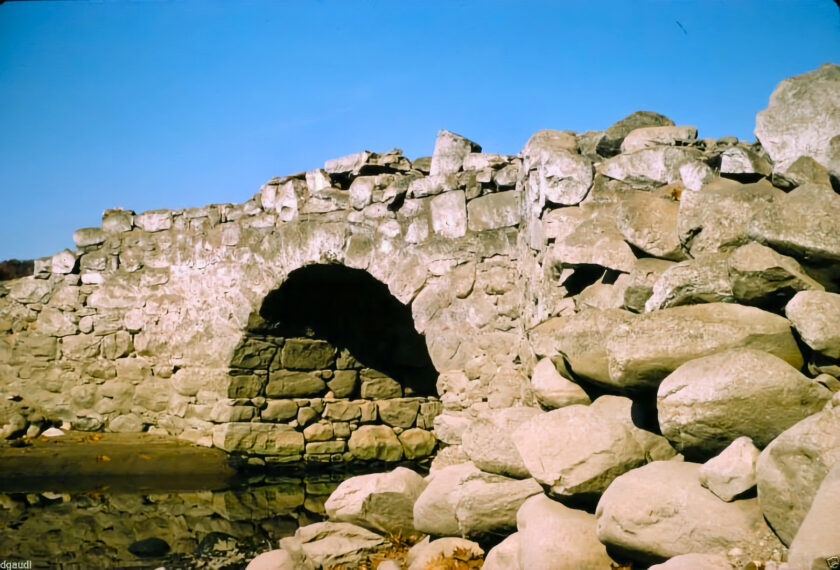
In the distance the Pascack Brook flows peacefully through a pristine landscape. A series of wagon roads head east from Pascack Road, bisecting the meadows and crossing the brook at old fieldstone bridges. Who among the passengers on our stage this morning can imagine that all those many acres of farmland, as well as those old roads and the farmhouses that stand on them, will eventually be submerged by a dam that converts the Pascack Brook into a reservoir?
Our journey continues in next week’s Pascack Press…