
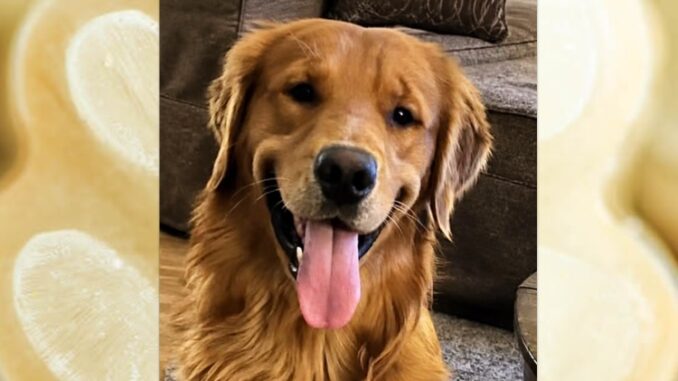
TOWNSHIP OF WASHINGTON, N.J.—When Joanna Policastro returned from vacation, she expected to find Buddy, her family’s 2-year-old golden retriever, waiting to greet her.
Instead, she learned that her son had taken Buddy to Westwood Regional Veterinary Hospital on Kinderkamack Road.
Buddy had stopped eating and was not acting like himself. At first, the family thought he might simply be missing Policastro. But as he became lethargic, her son brought him to the veterinarian.
According to Policastro, an examination and testing showed abnormalities in Buddy’s bloodwork and enlargement of his kidneys and liver. She said he was subsequently diagnosed with leptospirosis, a bacterial disease that can affect animals and people.
Buddy’s condition deteriorated rapidly. Policastro said his kidneys had been severely affected and dialysis was discussed as a possible treatment. Faced with a grave prognosis, she made the painful decision to have him euthanized.
“When I saw him, he just wasn’t the same dog,” Policastro said. “He could barely even wag his tail because he was so weak.”
Policastro is now sharing Buddy’s story to encourage other dog owners to learn about leptospirosis and discuss vaccination with their veterinarians.
“I don’t want to see another animal suffer with this ever, if it could be avoided,” she said.
According to the Centers for Disease Control and Prevention, leptospirosis is caused by bacteria spread through the urine of infected animals. The bacteria can contaminate water or soil, exposing other animals that come into contact with it.
Policastro does not know where Buddy was exposed. Her family has a fenced-in backyard, but Buddy regularly walked through the neighborhood with Scout, her son’s German shepherd.
She believes Buddy may have encountered contaminated water, wet grass or soil during one of those walks. As a retriever, she said, he frequently explored the ground with his nose and picked things up. Scout walked the same route but did not become ill.
The CDC lists possible warning signs in dogs including lethargy, loss of appetite, fever, vomiting, dehydration and changes in drinking or urination. As symptoms can vary, owners who are concerned about a dog’s health should contact a veterinarian.
The disease can also spread from infected animals to people through contact with contaminated urine, blood, water or soil. People caring for an infected animal should follow instructions from their veterinarian and healthcare provider.
A vaccine against leptospirosis is available for dogs. The American Animal Hospital Association updated its guidance in 2024 to recommend leptospirosis vaccination as a core vaccine for dogs unless there is a medical reason not to administer it. A core recommendation is professional veterinary guidance and does not necessarily mean that a vaccine is legally required.
Vaccination does not eliminate every possibility of infection, so owners should discuss their dogs’ health, vaccination history and potential exposure risks with their own veterinarians.
Policastro said she did not know about the vaccine before Buddy became ill. Since his death, she has made copies of informational material and placed them at libraries and municipal offices where residents obtain dog licenses.
Her aim, she said, is to make other owners aware that the disease exists and that they can ask their veterinarians about protection.
Buddy came to the family through a rescue organization after being fostered by a woman who lived nearby. Policastro’s son adopted Scout through the same rescue effort.
Buddy quickly became part of the entire family. Policastro, who has lived on Mountain Avenue for about 40 years, said she has owned dogs throughout her life.
“Every morning he would wake me up with a boot or a shoe in his mouth,” she said. “Everywhere you look, you expect him to come running around the corner.”
Policastro also thanked the veterinarian and veterinary technicians who cared for Buddy.
“They were wonderful,” she said. “I can’t say enough about how great they were with him.”
Although Buddy’s loss remains painful, Policastro said her family will open their home to another dog. For now, she said, “I’m hoping to save lives — to not have another dog go through what my poor dog went through.”