
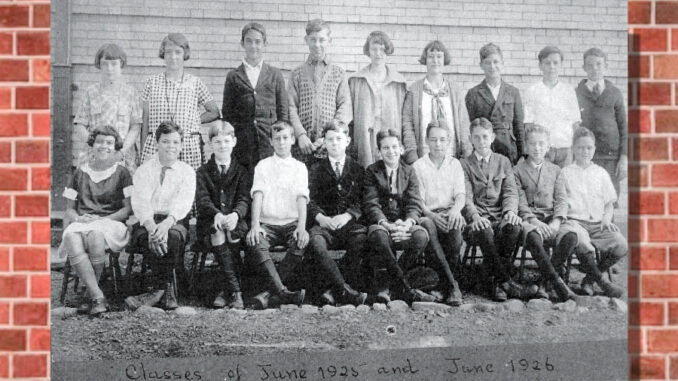
MONTVALE, N.J.—Bobbed hair, knickers, and knee socks were the height of middle-school fashion when Montvale’s seventh and eighth grades posed for this photograph outside the borough’s grammar school in the mid-1920s.
The older kids would be graduating in June of 1925, while the younger ones graduated exactly a century ago, in June of 1926.
These children would have been born around 1912. They grew up in rural Montvale at a time when horses and Model T cars shared the road, long before air conditioning, electronics, and all the other comforts that today’s middle-schoolers enjoy. They were children during World War I, but their young adult lives would be characterized by the Great Depression that was just a few years away.
The two grades together totaled 26 kids, although only 19 are pictured. It may seem like a surprisingly small group at first, but back then the population of the borough was less than 1,000, compared with today’s nearly 8,500 residents.
These kids attended classes at School No. 2 at the corner of East Grand Avenue and Waverly Place. The brick building was constructed in 1908 with two floors, each with two large rooms, and these provided classroom space for all grades up through eighth.
In 1927, three years after this photo, four more rooms and indoor plumbing were added.
The building later served as the borough’s library from 1975 to 2004, and in 2018 it was renovated into affordable housing units for senior citizens.