
First-Person: In My Experience
BY LARRY WOLFF
SPECIAL TO PASCACK PRESS
TOWNSHIP OF WASHINGTON, N.J.—I figure we were at it from 6 in the morning until 2 in the afternoon. Eight hours, and what I remember amounts to half a dozen slices of time.
One stop I remember was on Woodfield Road. A girl named Karen lived there. She was 15 and I had a secret crush on her. That might account for my memory of the address.
I was 15, too. Sid Barnes, the father of a friend of mine, was collecting clothes for Hungarian refugees. He lived on Sussex Road. He got a truck and recruited me to ride along. At each stop I’d hop out, pick up what people had left at the curb and load it in the back.
We’d moved out from Brooklyn when I was 12. I used to trap muskrats here, if that gives you an idea of the township back then. We rode our bicycles. I was a charter member of Boy Scout Troop 227 and later joined the first Explorer Scout group in town. Sometimes when I leave David’s Bagels in Washington Town Center, I still take the long way home to go past the house of a fellow I knew in those days.
Earlier in 1956 my father and I helped begin the monumental task of manually clearing a dense, heavily wooded lot to build Clark Field. I recall loading our rake, hoe, shovel, and wheelbarrow into the car with my neighbors on Woodfield road and Sussex road and heading out.
We had the rough making of a diamond after a long weekend or two.
Some roads in the area were not blacktop, but constructed of used roofing tile that was sliced into 6-inch-long and half-inch-wide pieces.
I didn’t understand much about Hungary at 15. That October, students had marched in Budapest, and their protest grew into an uprising against Soviet rule. On Nov. 4, Soviet tanks moved in to crush it. Some 200,000 people fled Hungary in the months that followed, most of them crossing into Austria.
On Nov. 21, the first 60 Hungarian refugees coming to New Jersey landed at McGuire Air Force Base through Operation Safe Haven. The Army had reopened Camp Kilmer to receive them. They’d get there in time for Thanksgiving dinner.
How Mr. Barnes knew to take the truck to McGuire, I have no idea. I can’t remember the words he used when he told me where we were going. I remember his face, though. He had an energy about him when he talked about McGuire. I could feel it.
I don’t remember arriving at the base. But I can see myself standing by the truck on the tarmac, watching people come down the steps of the plane. They came over and stood in line. I took clothes out of the truck and handed them around.
There was a little girl who looked about 6. I remember her barefoot, wearing a nightgown. I never knew her name or what became of her.
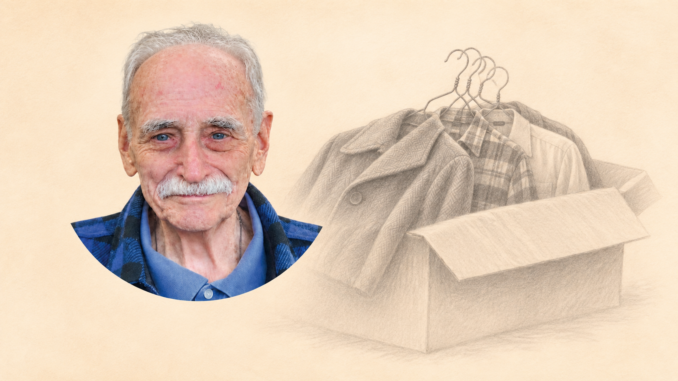
John asked me if that day changed me in any way. What I can say is I appreciate it more now. Take the hangers. There’d be bags and boxes at the curb, and on top of a box there might be 10 hangers all together, with the clothes still on them. At 15, I picked them up. It took me years to think about the person who’d stood in front of that closet. From the way those hangers were bunched together, it looked to me like somebody had reached in, taken a whole armful right off the rod, and carried it outside. Whatever was on those hangers, they gave.
Years later, my ham radio group used to go over to the falls in Paterson, where kids were hauling junk out of the river. We’d bring our gear and show them how to send their names in Morse code. I’d have one kid sending his name and another looking over his shoulder. By the time the second kid got to me, he knew the routine. Kids do a lot of good work. They just don’t get publicized.
Years ago I went to the library to see if anybody knew about our clothing drive. I could find accounts of the plane landing and the refugees getting on buses for Camp Kilmer. What drove me nuts was the little piece missing in between.
So that’s the part I wanted to get into the paper: the esprit d’corps of the Township of Washington. This is a thorn out of my side after all these years. No one ever reported on it. The people back home who’d put those clothes out on the curb, and were so generous, ought to get a little credit, even though they never asked for any.
Editor’s note: “In My Experience” is a personal essay series in which writers reflect on their lives and the lessons they’ve drawn from them. Pascack Press editor John Snyder wrote this essay in Mr. Wolff’s voice based on several conversations with him. Mr. Wolff reviewed drafts and approved the final text. The recollections and opinions are his own. Publication does not imply endorsement by Pascack Press.