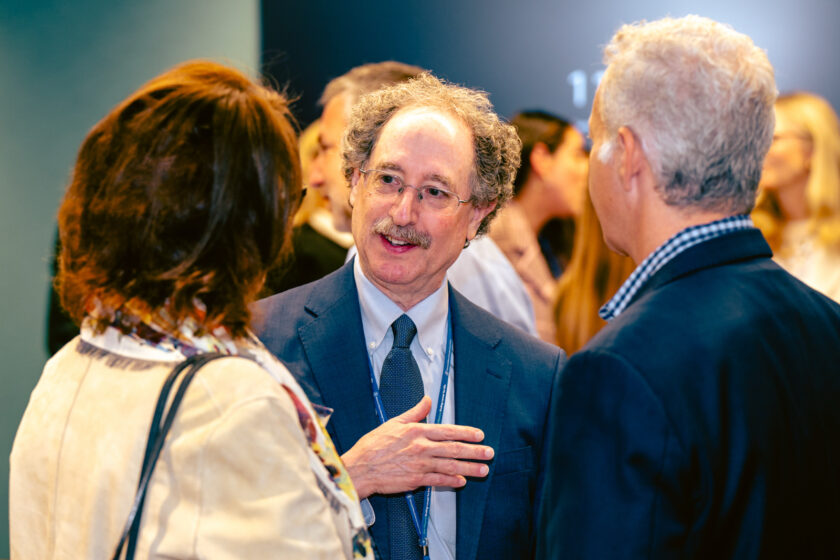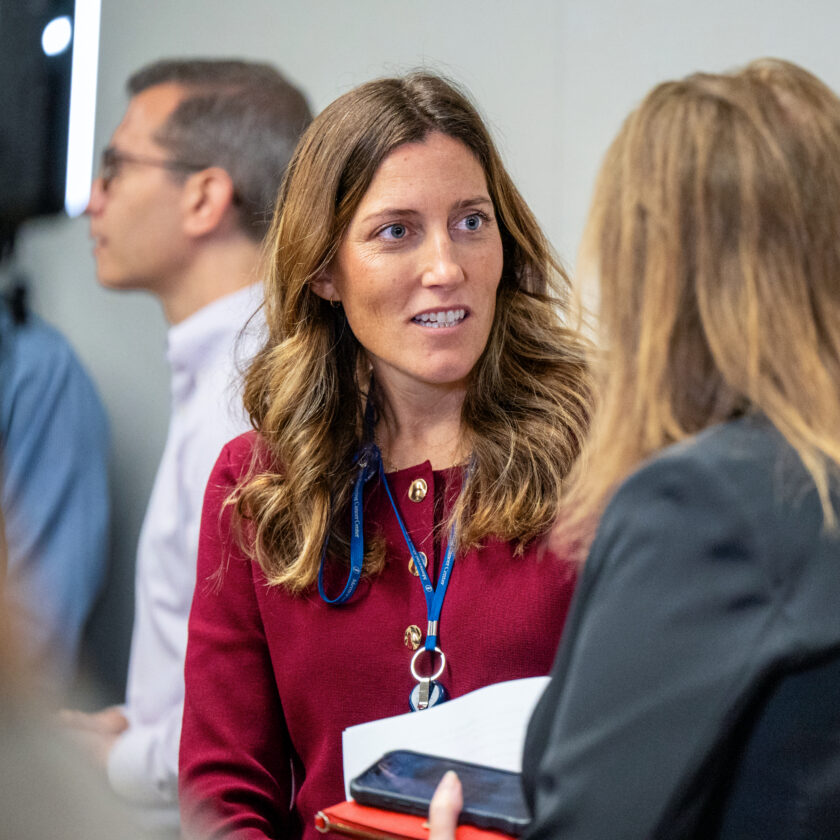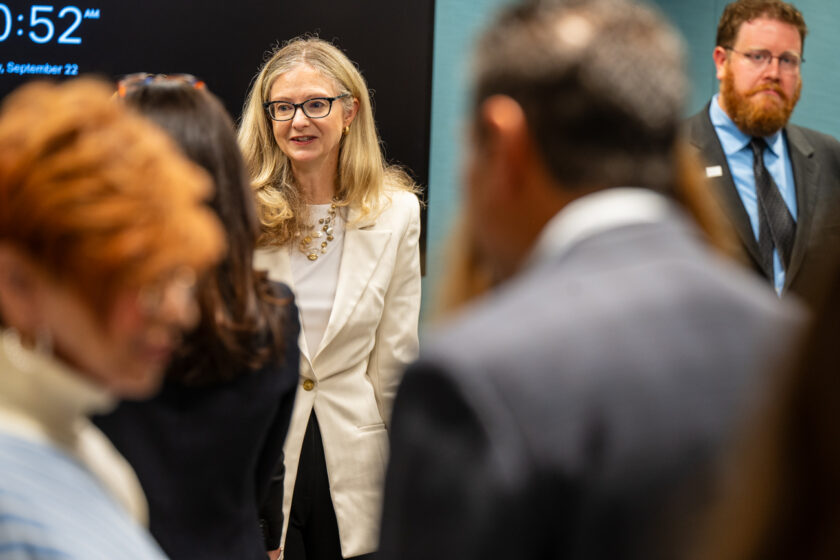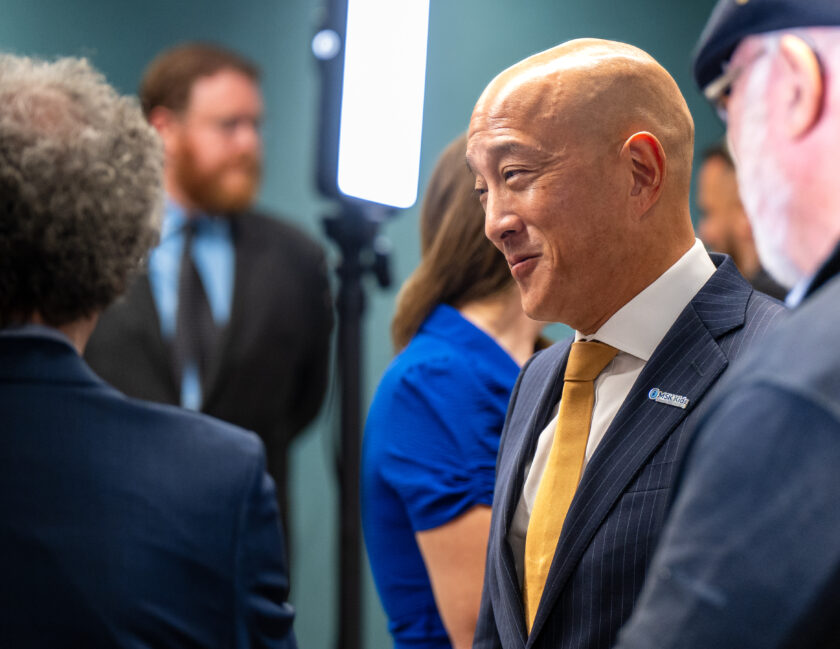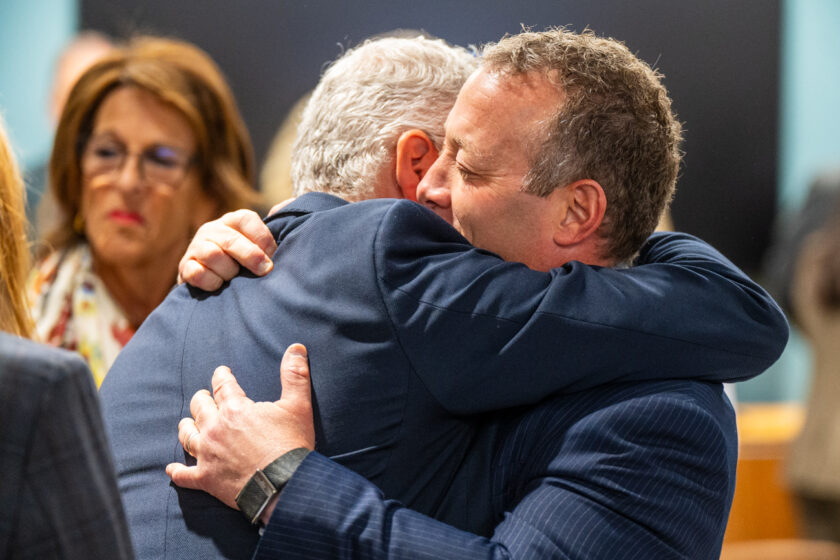
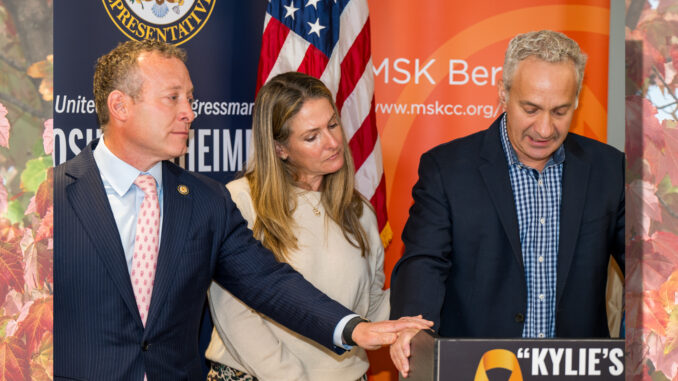
MONTVALE, N.J. — Family and friends packed the room at Memorial Sloan Kettering Bergen, alongside hospital staff, cancer advocates, and supporters. Among those gathered were the doctor who had treated Kylie Elana Kupperman and the congressman who had known her since the day she was born.
At the center were her parents, Adam and Hayley, sharing the story of a daughter whose determination carried her through childhood cancer, years of difficult treatment and into college — and whose name now carries their hopes for other children.
“We cannot change what happened to Kylie,” Adam Kupperman said. “That is the painful truth our family lives with each and every day.”
“But through this legislation, Kylie’s story can help change what happens to the children and families that come after her.”
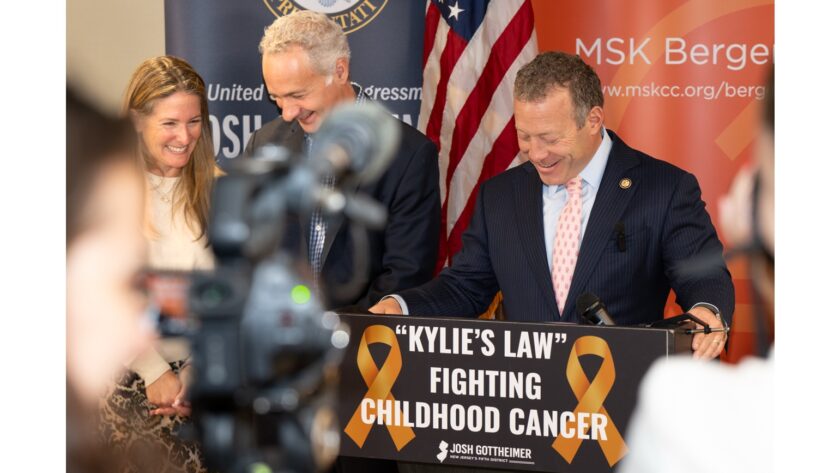
The Sept. 22 gathering, during Childhood Cancer Awareness Month, marked U.S. Rep. Josh Gottheimer’s announcement of the bipartisan Kylie’s Voices for Childhood Cancer Act, or “Kylie’s Law.” The measure, introduced with U.S. Rep. Mike Lawler of New York, would require states receiving federal funding for comprehensive cancer control plans to include at least two pediatric cancer experts on the coalitions that develop them.
For the people crowded into the Montvale facility — in a meeting space on the expansive, leafy campus — the policy had a familiar face: a young woman who loved dancing, fashion, Yankee games, and the color pink.
Kylie was born in Englewood and grew up in Chappaqua, New York. Gottheimer, a college friend of her parents who still counts Adam as his best friend, was the first of their friends to meet her at the hospital, Adam recalled.
Years later, severe headaches sent the family to Kylie’s pediatrician. She was not yet 4.
“In a matter of hours, we went from being a healthy, happy young family to fighting for our daughter’s life,” Adam said.
Diagnosed with medulloblastoma, a malignant brain tumor, Kylie underwent surgery, proton radiation and chemotherapy. After nearly 16 months of treatment, her father said, she was declared cancer-free.
But treatment left lasting physical and developmental challenges. She was smaller than her peers and struggled with processing speed and short-term memory. School demanded extraordinary effort.
She kept working. She earned a merit scholarship to the University of Delaware, her first-choice college, and studied fashion design. To her family and friends, she was “Smiley Kylie,” a devoted big sister to Alexa and Jared.
Just before college, another scan brought devastating news. In his account to the gathering, Adam described a later brain cancer that doctors believed was likely caused by the radiation she had received as a little girl.
Even through another round of surgery and treatment, Kylie completed her freshman year. She traveled to Miami for a Taylor Swift concert, went on family vacations and attended Yankee games.
She died Sept. 10, 2025, at 19.
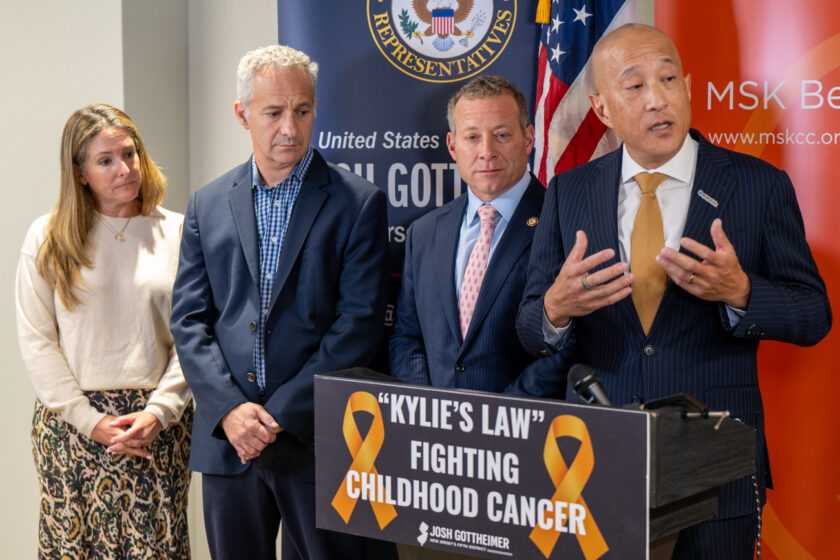
Her father’s account gave the legislative proposal its urgency: surviving the first cancer is only part of what children and their families face.
“Childhood cancer is not simply adult cancer in a smaller body,” Adam said. “Children face different diseases, they require different treatments, and they can live with the consequences of those treatments for the rest of their lives.”
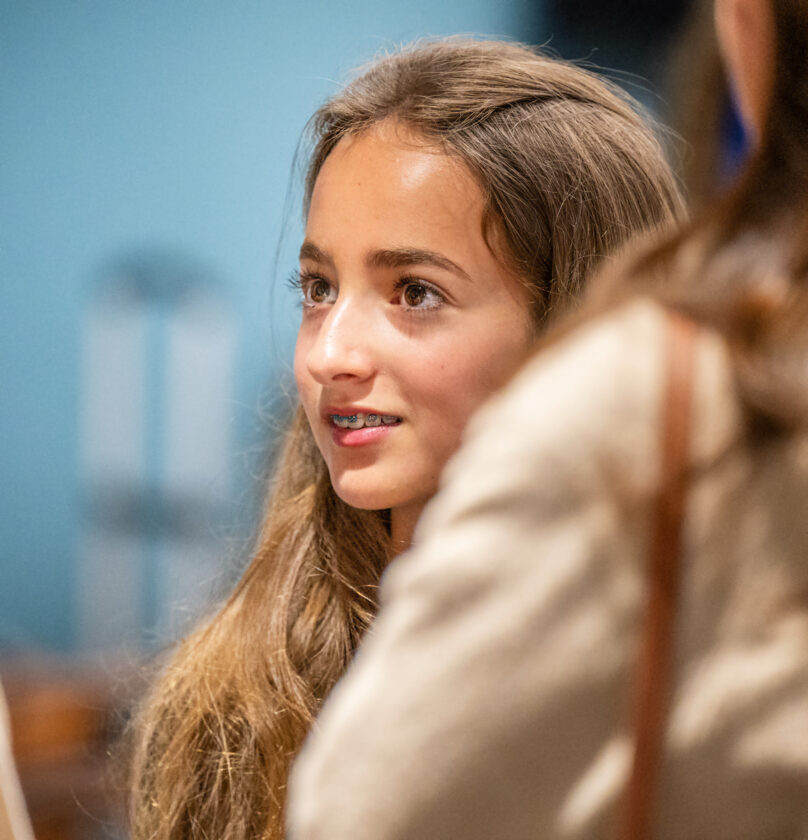
That concern was shared by the physicians standing with the family.
Dr. Andrew Kung, chair of pediatrics at Memorial Sloan Kettering, thanked the Kuppermans for helping other families while grieving their own loss.
“It really takes a special family to be able to take the tragedy of losing a child and turn it into something that can help many other children in the future,” Kung said.
Dr. Ira Dunkel, the pediatric neuro-oncologist who had cared for Kylie, described both the progress in childhood cancer treatment and the work still ahead. Some pediatric brain tumors remain extraordinarily difficult to treat, he said, while children who survive can face lifelong consequences from the disease and its treatment.
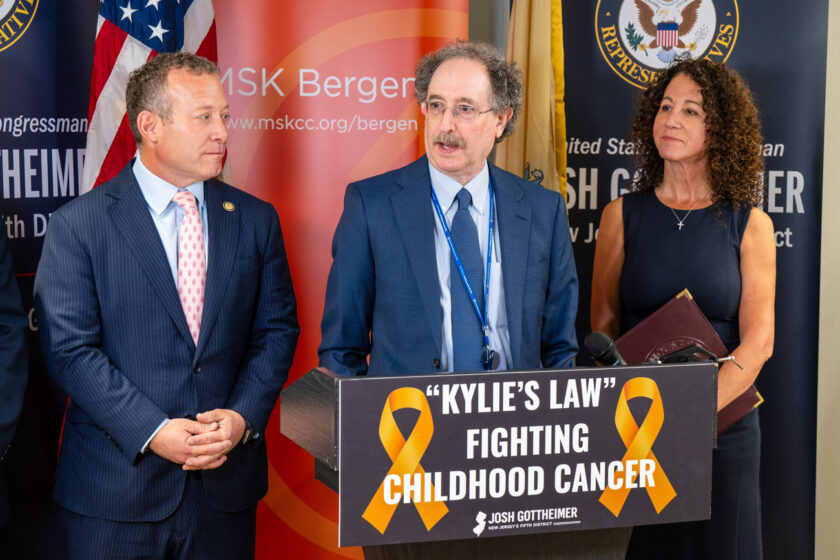
For state Sen. Holly Schepisi, the gathering also carried an immediate personal connection. In her opening remarks, she said her stepfather was being treated at MSK for stage four pancreatic cancer. In a later conversation, she spoke of both her father and stepfather facing cancer.
“This is an issue that transcends politics. It transcends federal as well as state,” Schepisi said.
She pointed to her work co-sponsoring legislation in 2021 that provided $5 million for New Jersey’s Pediatric Cancer Research Fund.
“It was a start. It started with $5 million, but we need to do more,” she said.
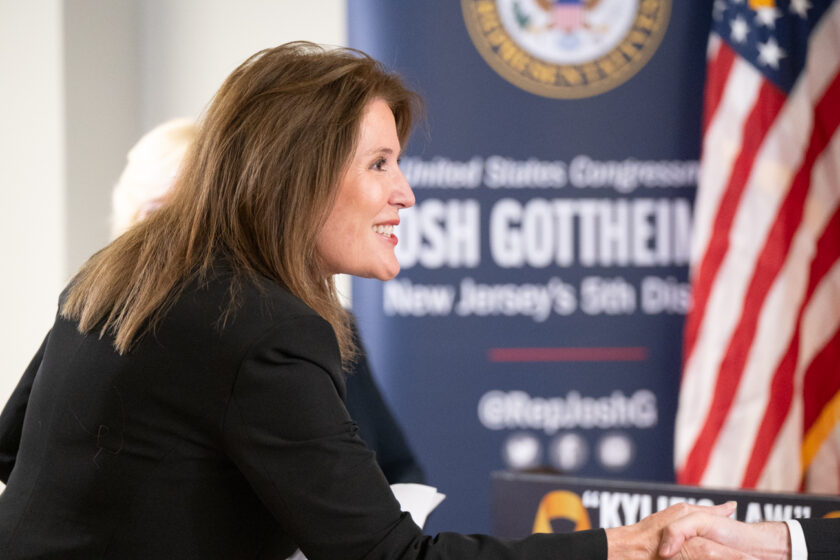
Kylie’s Law seeks to make pediatric expertise a permanent part of state cancer planning. Those plans guide priorities for prevention, treatment and support for patients and survivors. According to Gottheimer’s office, only about a third of states include specific childhood cancer goals in their plans.
Beyond requiring two pediatric cancer experts on participating state coalitions, the bill would establish a national pediatric cancer advisory committee within the U.S. Department of Health and Human Services. Federal health agencies, state programs, pediatric cancer professionals, survivors and caregivers would help develop recommendations for childhood cancer and adolescent and young adult care.
The measure would also explicitly include pediatric cancer in the Maternal and Child Health Services Block Grant Program, allowing states to use existing federal dollars to support children with cancer and their families.
Mike Henry, director of advocacy for the Pediatric Brain Tumor Foundation, said the proposal would address a persistent problem for the pediatric cancer community.
“Far too often on the state level, our community doesn’t have a voice in the room, on important cancer related issues,” Henry said. “And this piece of legislation changes that.”
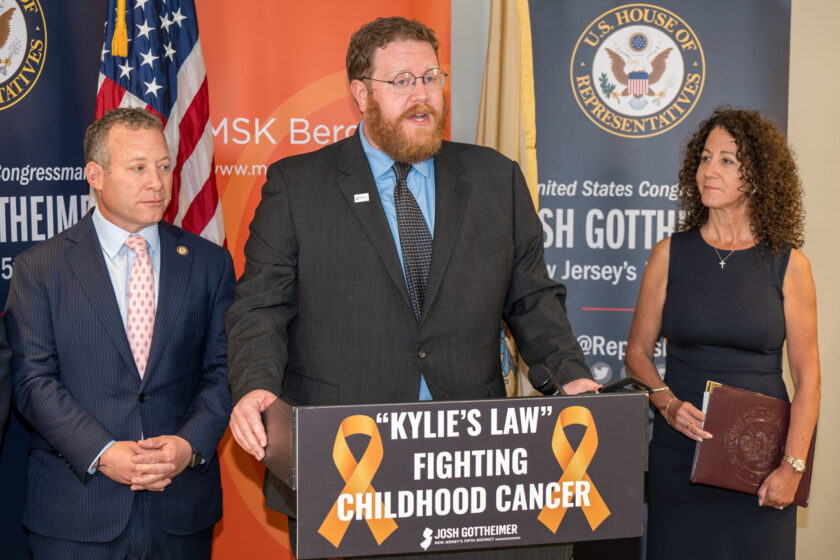
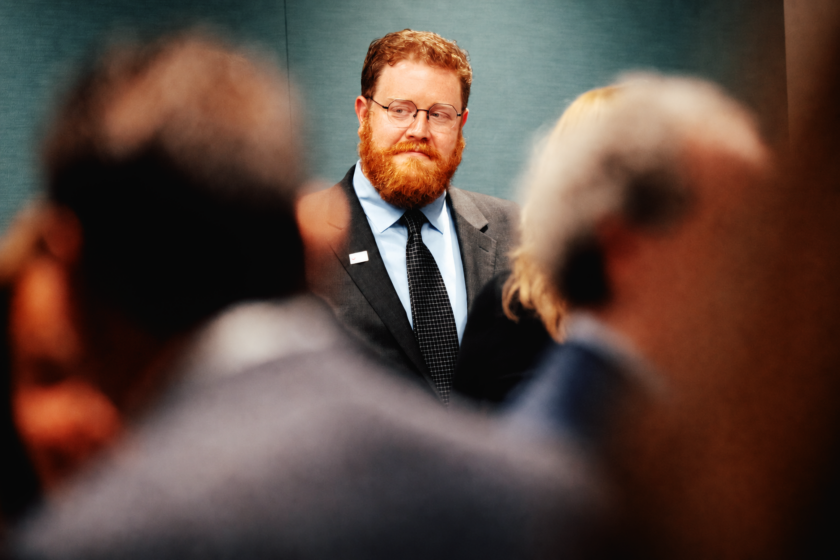
Lawler was represented by his district director, Donna Chiapperino, who thanked the Kuppermans for allowing their daughter’s legacy to become a source of hope for other families.
Representatives of the Christopher Brandle Joy of Life Foundation also attended. Gottheimer’s wife, Marla, joined the gathering, which brought together people who knew Kylie personally and people whose work is devoted to children like her. Remarks before television cameras were marked by tears and laughter. At one point Gottheimer lay a steadying hand on Adam’s as he recounted how brightly Kylie had lived; he later ribbed the Kuppermans, former Englewood residents, for having “gotten lost” by way of their move from the Garden State to New York.
The proposal also drew statements of support from Pediatric Brain Tumor Foundation CEO Jeff Gelfand; Dean Crowe of the Rally Foundation for Childhood Cancer Research; and Ginny McLean, board chair of the Coalition Against Childhood Cancer.
Gottheimer said he is working with state Sen. Joe Lagana, Assemblywoman Lisa Swain and Assemblyman Chris Tully on accompanying New Jersey legislation to preserve pediatric representation on the state’s cancer control coalition under future administrations.
He also plans to introduce a House resolution on Nov. 13, which would have been Kylie’s 21st birthday, commemorating the date as “Kylie’s Day.”
For the Kuppermans, the September gathering already fell on a meaningful date: the anniversary of Kylie’s bat mitzvah, when she had stood before family, friends and her community and used her own voice.
Now, her father said, legislation bearing her name could help make sure other children are heard.
“This legislation carries Kylie’s name,” Adam said. “But it represents every child fighting cancer, every survivor living with the lasting effects of treatment.”