
BY KARIN LEE
SPECIAL TO NORTHERN VALLEY PRESS
DEMAREST, N.J.—Bergen County residents on the evening of Aug, 7 received their 10th flash flood warning from the county’s Office of Emergency Management amid the county’s third heat wave of the summer.
The New Jersey Department of Health also reported 387 emergency department visits and 29 suspected heat-related deaths from July 1 to 4.
Reports of climate-related risks are increasing. But how concerned are residents, and what are local officials doing on this front?
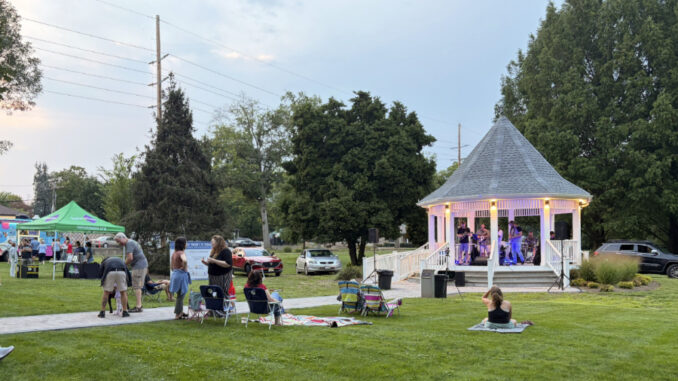
Demarest residents attending a performance by The Possums on Feeding Neighbors Night on Aug. 12 shared their views on climate change through a brief, unscientific poll. Asked which impacts concerned them most, most respondents selected flooding and extreme heat.
Participants rated their concern on a scale from zero, meaning not worried at all, to 10, meaning the most worried they had ever been. Extreme heat received an average rating of 7.7, while flooding averaged 7.43.
Responses varied. One resident said limited funding restricts the borough’s ability to address flooding and extreme heat, adding that such large-scale issues should be addressed at the state or county level. Other respondents said they did not know what Demarest was doing to address these issues.
According to Mayor Bernstein, the borough’s approach to flooding involves several measures.
“I don’t know that there’s a single step that’s taken. I think all steps are interrelated, and each contributes toward the overall mitigating effect that the council wants to achieve with respect to water.”
Efforts include improving road drainage, installing catch basins, requiring seepage pits and other stormwater-management measures for new construction, and seeking outside funding.
At the June 23 council meeting, Borough Clerk Julie Falkenstern said Demarest had submitted an initial request for $2.5 million through the Water Resources Development Act for stream maintenance. As of Bernstein’s latest update, the borough had not received approval for the federal funding.
In a separate interview, Borough Engineer Nick Chelius described how flood mitigation is incorporated into new construction.
“Rather than it being a big project we did to reduce flooding, it’s more like we are just constantly monitoring all the construction that’s going on to make sure they are complying with all the rules that are already placed to mitigate flooding,” Chelius said.
New construction requires seepage pits, which temporarily store stormwater and allow it to return gradually to the soil, reducing runoff into rivers, streams and neighboring properties.
Demarest is also developing a state-required Watershed Improvement Plan to address watershed conditions and potential flooding.
While the poll showed similar levels of concern about extreme heat and flooding, officials described fewer municipal measures specifically addressing heat.
Chelius said he was not aware of any projects related to extreme heat.
Planning Board member Todd Adelman said rising temperatures could increase electricity demand through greater use of air conditioning and heat pumps. He noted the importance of good insulation and roofs that meet building codes.
Adelman also discussed potentially recommending reflective roofs.
“We’re not there yet, but I can see when we are going to get there.”
For now, Demarest’s efforts focus largely on flooding and stormwater management. The survey suggests an information gap as well: Most respondents said they were unaware of what the borough was doing to address their concerns.
Karin Lee is a student at Northern Valley Regional High School at Demarest who is interviewing residents and local officials across the Northern Valley to explore how towns view their vulnerability to climate change, particularly around flooding and extreme heat. Northern Valley Press is proud to amplify the voices of student journalists. For more information write editor@thepressgroup.net